Finance & management reporting
Your finance team shouldn’t have to rebuild the truth every month.
If management reporting depends on fragile spreadsheets, manual consolidation or logic that only one person fully understands, the reporting process has become a business problem — not just a finance inconvenience. One critical management report can be a sensible first project.
Management reporting
P&L & FP&A
Multi-source finance data
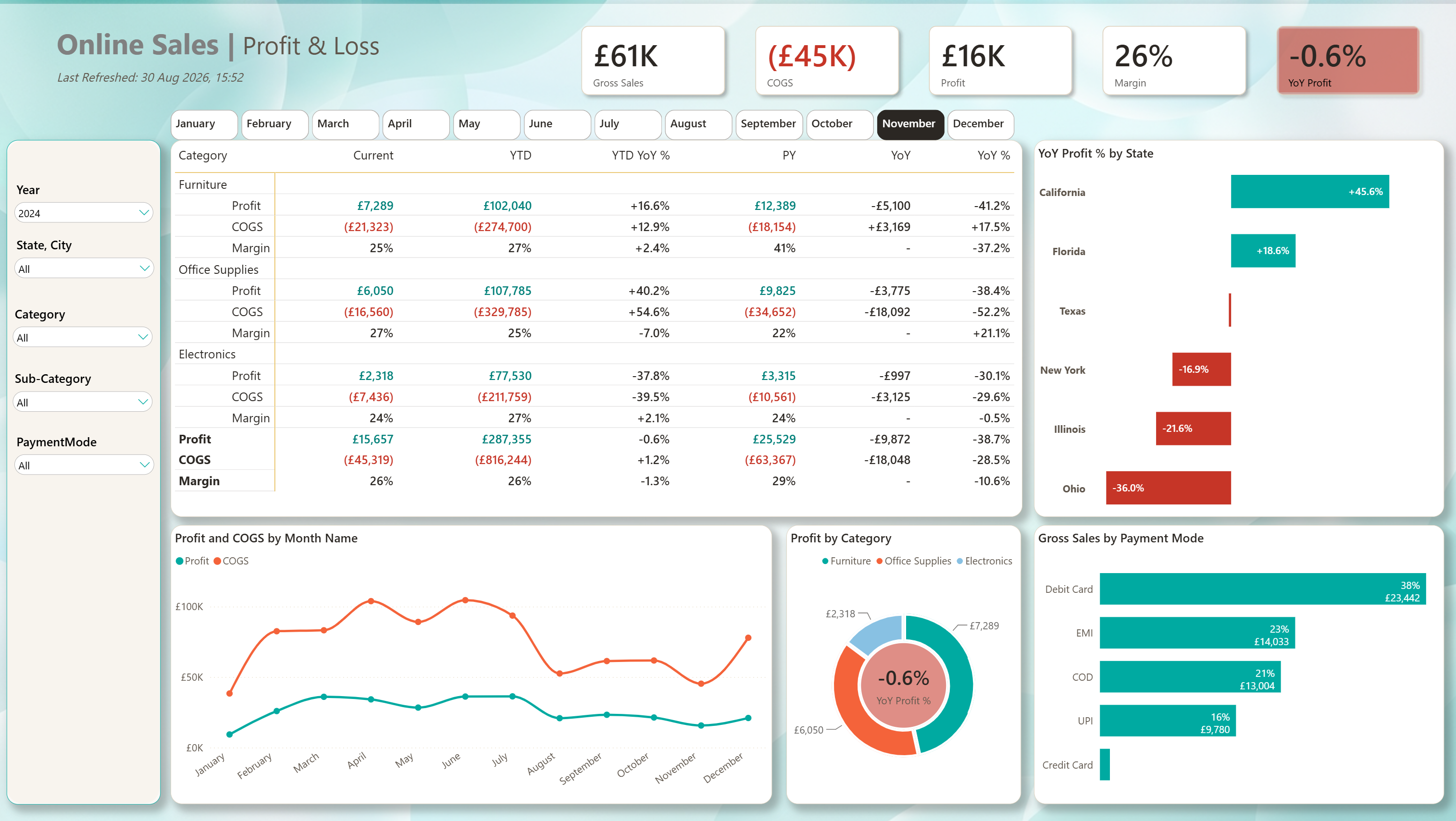
Complex finance reporting experience
Portfolio visual uses non-confidential example data.
Source to board packOne technical thread from raw source data through the model to management reporting.
Legacy logic understoodMappings, formulas, exceptions and inherited rules traced before they are rebuilt.
Multiple systems welcomeERP, SQL, exports, Excel, SharePoint and other practical enterprise sources.
Built to hand overDocumentation, explanation and maintainability are part of the delivery — not an afterthought.
When finance reporting starts to break
The symptoms usually show up long before anyone calls it a transformation project.
You do not need a failed ERP programme or a broken dashboard to justify fixing the process. Often the warning signs are much more ordinary.
Month-end production
The team spends too much time assembling the report.
Files arrive from different places, formulas are refreshed, links are checked and the same pack is rebuilt every reporting cycle.
→Automate repeatable preparation and move the recurring logic into the reporting model.
Key-person dependency
One workbook — or one person — holds too much business knowledge.
Important mappings, exceptions and workarounds have accumulated over time without becoming part of a documented reporting design.
→Make the logic visible, testable and explainable so the process belongs to the business.
Reconciliation fatigue
Finance spends time explaining why two reports disagree.
Different extracts, definitions or calculation paths produce competing versions of the same number, undermining confidence in the final output.
→Create one governed model for the calculations and definitions management relies on.
Growth without capacity
Every new entity, product or reporting request adds manual work.
The process scales by adding tabs, columns and another person to the chain instead of making the underlying reporting system more capable.
→Build a model designed to absorb complexity without multiplying the monthly workload.
What changes
Move the intelligence out of the reporting ritual and into the reporting system.
The goal is not simply to redraw the current spreadsheet in Power BI. It is to separate source data, business logic and presentation so each part can be managed properly.
01 · Sources
Establish the data
Identify where each number originates, how it can be accessed and which source owns each part of the reporting truth.
02 · Logic
Trace the rules
Understand mappings, hierarchies, time logic, adjustments, exceptions and calculations currently embedded in the process.
03 · Model
Build it once
Translate that logic into a maintainable Power BI model with reusable measures and clear relationships.
04 · Reporting
Use it repeatedly
Deliver management reporting that refreshes reliably and gives finance more time to interpret the numbers rather than assemble them.
Founder in-house experience
A complex P&L reporting process rebuilt from the logic upwards.
In an in-house role, StrategiQ Analytics’ founder independently handled the Power BI side of a complex P&L reporting rebuild. The work involved long-established spreadsheet logic and reporting requirements across multiple business functions.
- Learned the financial and accounting logic from the people using the process rather than assuming the spreadsheet was correct.
- Traced source data and inherited calculations across a long-established reporting landscape.
- Validated inherited calculations and reporting logic before translating them into the new model.
- Designed the final Power BI solution to be capable enough for the requirement, but simple enough to explain, maintain and support.
The business outcome
Better reporting is not just a nicer dashboard.
The value is in changing what the finance team has to do every reporting cycle — and making the numbers easier for the business to trust and use.
Less manual preparationRecurring collection, transformation and calculation work can be automated where the source environment allows.
Clearer definitionsImportant measures and business rules live in a model that can be inspected and explained rather than scattered across workbook formulas.
More reliable ownershipDocumentation and handover reduce dependence on the person who originally built the reporting process.
More useful finance timeThe team can spend more of the reporting cycle analysing performance and answering questions instead of rebuilding the pack.
How an engagement works
Finance knowledge stays with finance. Technical ownership stays with us.
You do not need to write a data specification. The reporting process itself is the starting point.
1
Walk through the report
Understand what is produced, who uses it, where time is lost and which outputs are genuinely important.
2
Trace data & logic
Work backwards through sources, spreadsheets, mappings and business rules until the process can be explained.
3
Build & validate
Develop the reporting model and validate the numbers with the finance people who understand what correct looks like.
4
Deploy & hand over
Put the solution into production with refresh, access, documentation, training and support appropriate to the organisation.
Is this the right kind of problem?
You do not need to be ready for a huge transformation programme.
A strong fit if…
- Your monthly or weekly reporting process relies heavily on manual Excel work.
- Finance uses several systems or extracts to build one management view.
- Important reporting logic is difficult to explain, maintain or transfer between staff.
- You already have Power BI but do not trust the underlying reporting process.
- The business is growing faster than the reporting process can comfortably support.
It can start smaller than you think.
- One critical management report can be a sensible first project.
- A paid discovery can be used where the scope is genuinely unclear.
- You do not need perfectly cleaned data before the conversation starts.
- Existing ERP and finance systems can usually remain in place.
- If the problem turns out not to need a large build, the solution should stay proportionate.
Common questions
Before you make it into a project brief.
Do we need to replace our ERP or finance system?
No. In most cases the job is to work with the systems you already have, establish reliable access to the relevant data and improve the reporting process around them. If a source-system limitation genuinely prevents the required outcome, that becomes part of the recommendation rather than an assumption made at the start.
Can this start with a single report or P&L process?
Yes. A focused reporting process can be a very good starting point, particularly when it is business-critical and manually intensive. The architecture should match the problem rather than forcing every engagement into an enterprise-scale programme.
What if most of the logic is buried in Excel?
That is exactly the kind of environment this work is designed for. The first task is to understand the formulas, mappings, exceptions, manual interventions and source dependencies before deciding what should move into the new model.
Can you work with confidential finance data?
Yes, with appropriate project terms and data-handling arrangements. Please do not send confidential datasets through the public website form. Once the engagement is being discussed, a suitable transfer method or client-controlled environment can be agreed.
What if the scope is too messy to quote accurately?
That is where a paid discovery or Data Audit is useful. The existing process can be mapped first, with the output used to define a sensible implementation scope rather than guessing at the complexity.
Finance reporting getting in the way?
If the reporting process is getting in the way of the business, let’s look at it.
You do not need a finished requirements document. Show us the report, explain how it is produced and tell us where the process hurts. We can work backwards from there.